
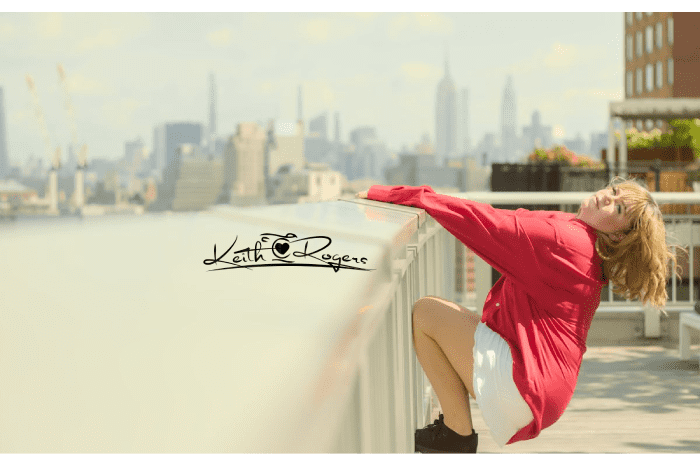
A Session
with Lyla Illing
Photographed by Keith Hasvision Rogers for Evarlv.com
Would you still do it if no one was watching?
Would you still show up if there was no money in it?
Would you still create if the world was ending?
The World Had Stopped. We Didn't.
New York City in the summer of 2020 was something no one had words for. The stages were dark. The venues were locked. The streets that usually hummed with the kind of creative energy that pulls artists from every corner of the world — quiet.
The city that never sleeps had been forced to lie down. And for the music community especially, it felt like someone had pulled the plug on everything that made this life worth living.
No shows. No tours. No sessions. No stages.
For a lot of people, 2020 became the year they questioned everything. Why am I doing this? Is this even worth it? What's the point?
But there were others — a quieter group — who never stopped asking a different question entirely.
How do I keep creating?
The question that changed everythingLyla Illing was one of those people. And so was I.

A Singer, A Photographer, and Battery Park
Lyla Illing is not easy to put in a box — and that's exactly what makes her worth photographing. A South African born singer-songwriter, author, radio producer, and activist who packed up her life, threw a guitar over her shoulder and moved to New York City to find out if the dream was real.

And in the middle of a global pandemic, she was standing in Battery Park ready to shoot.
No crowd. No venue. No guarantee of anything. Just an artist who understood that the work doesn't stop because the world does.
I remember thinking — this is what it looks like when someone truly loves what they do. There was no event to promote, no label pushing a deadline, no manager requiring content. There was just Lyla — fully present, fully committed, doing what artists do.
Even when no one knew if there would be anyone left to hear it.

The Test Nobody Asked For
2020 was the great filter for creatives. It didn't care about your following. It didn't care about your resume. It asked one question and one question only — how much do you actually love this?
Because when the money stopped and the opportunities dried up and the stages went dark and the whole world was holding its breath wondering if things would ever go back to normal — what you chose to do with that silence revealed everything.
Some people stepped back. Understandably so. The risk was real. The uncertainty was suffocating. And there is no judgment in choosing stillness when the world demands it.
But some people — quietly, without audience, without applause — kept going.
They wrote songs in their apartments. They rehearsed in empty parks. They booked shoots in open spaces because they couldn't stop creating even when creation felt impossible. Not because someone was paying them. Not because it was smart or safe or strategic.
Because they didn't know how to be themselves without it.
Lyla was one of those people. And I'll be honest — so was I.
I picked up my camera in 2020 the same way I always had. Not because there were events to cover or clients lined up or a full calendar of bookings. But because putting the camera down felt like giving up on something I wasn't willing to give up on. Photography wasn't what I did — it was part of who I was. And no pandemic was going to take that from me.
That's the thing about passion that people don't always tell you.
It's not comfortable. It's not convenient. And it absolutely does not wait for the world to be ready.
What These Photos Actually Capture
When I look back at the images from that Battery Park session, I don't just see a singer-songwriter in a beautiful location on a summer afternoon.
I see evidence.

Evidence that two artists — one who's a guitarist/pianist/Singer-Songwriter, one who's a Videographer/Photographer/Musician— showed up for their craft on a day when the entire world had a legitimate excuse not to. Evidence that the love of creation is not a fair-weather thing. Evidence that real artists don't create because conditions are perfect.
They create because they can't imagine doing anything else.
Battery Park · August 2020There's something rare and deeply human about that. And it deserves to be documented.

